
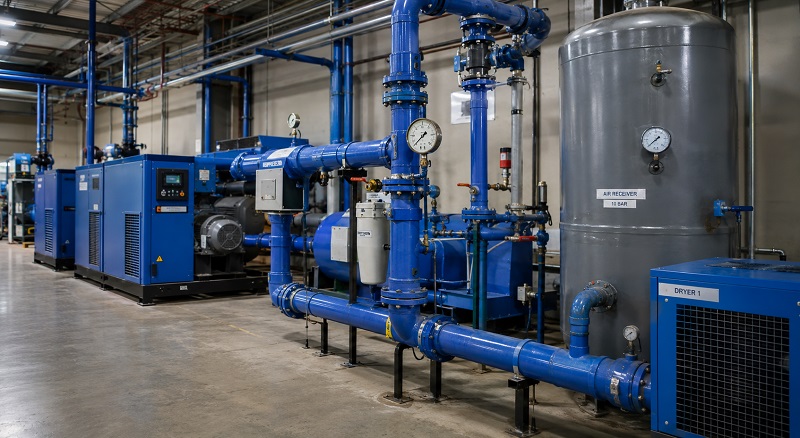
In many industrial facilities, compressed air is often described as the fourth utility, alongside electricity, water, and gas. It powers critical machinery, pneumatic equipment, automation systems, packaging lines, and production processes across countless industries. Yet despite its importance, compressed air is also one of the most expensive utilities to generate and maintain.
What makes compressed air particularly costly is inefficiency. Even small inefficiencies within compressed air systems can result in significant operational waste. One of the most overlooked, yet highly expensive problems is pressure drop in compressed air systems.
A pressure drop may seem minor on paper. A loss of just 0.5 to 1 bar might not sound significant, but in practice, it can dramatically increase compressor load, raise energy consumption, reduce equipment performance, and create hidden operational costs that compound over time.
For many businesses, pressure loss remains invisible until symptoms begin affecting productivity: slower pneumatic tools, unstable air delivery, rising electricity bills, or unexpected downtime.
Understanding pressure drop is essential for improving compressed air efficiency, reducing compressed air energy loss, and maintaining reliable industrial performance.
What Is Pressure Drop in Compressed Air Systems?
Pressure drop refers to the reduction in air pressure that occurs as compressed air travels through a system.
In a typical compressed air network, air moves through:
- Compressors
- Air receivers
- Dryers
- Filters
- Pipes
- Valves
- Fittings
- Hoses
- Point-of-use equipment
As air flows through these components, resistance naturally occurs. This resistance causes energy loss, resulting in reduced pressure by the time air reaches the final application.
Think of it like water flowing through a pipe. If the pipe is narrow, blocked, or full of bends, water pressure decreases. The same principle applies to compressed air systems.
Pressure drop happens because of:
- Air flow resistance
- Friction inside piping
- Restricted components
- Poor air reticulation design
- Leaks and blockages
The greater the resistance, the greater the pressure loss.
Why Pressure Drop Matters
Pressure drop is not just a technical measurement, it has direct operational consequences.
Compressor Performance
When pressure drops occur, compressors must work harder to maintain required operating pressure.
If production requires 7 bar at the point of use but the system loses 1 bar through the distribution network, the compressor may need to generate 8 bar or more.
That extra pressure increases energy demand significantly.
Energy Consumption
Compressed air systems are energy-intensive by nature.
A commonly accepted industry estimate is:
Every 1 bar increase in pressure can raise energy consumption by approximately 7–10%.
That means small pressure losses can create major electricity costs over time.
Equipment Efficiency
Many pneumatic tools and machines are designed to operate within specific pressure ranges.
Low pressure can cause:
- Reduced actuator speed
- Poor tool performance
- Inconsistent machine movement
- Reduced production speed
This directly affects industrial productivity.
Production Reliability
Unstable pressure often leads to process inconsistency.
Production lines may experience:
- Slower cycle times
- Uneven output
- Packaging failures
- Automation errors
This can compromise manufacturing quality and throughput.
Operating Costs
Pressure loss creates multiple cost layers:
- Higher electricity bills
- Increased maintenance
- More wear on compressors
- Reduced equipment lifespan
- Downtime losses
Many facilities underestimate how expensive this becomes annually.
Common Causes of Pressure Drop in Compressed Air Systems
Pressure loss rarely comes from a single source. It is usually the result of multiple inefficiencies.
Undersized Pipes
Pipe sizing is one of the biggest contributors to pressure drop.
If pipes are too small for required airflow, air velocity increases and resistance rises sharply.
Undersized pipes cause:
- Restricted airflow
- Increased turbulence
- Higher friction losses
Even a well-maintained compressor cannot overcome poor pipe sizing efficiently.
Long Pipe Runs
The longer compressed air travels, the greater the friction loss.
Long pipe runs increase:
- Pressure loss
- Air resistance
- Energy consumption
This becomes especially problematic in large facilities where compressors are located far from production areas.
Poor system layout often worsens this issue.
Poor Pipe Layout
Air reticulation design plays a major role in system efficiency.
Common design mistakes include:
- Too many elbows
- Excessive bends
- Multiple junctions
- Restrictive fittings
- Dead-end pipe sections
Every bend creates turbulence and pressure loss.
A poorly designed reticulation system forces compressors to compensate continuously.
Blocked or Dirty Filters
Filters are essential, but neglected filters become major restrictions.
Blocked filters increase resistance and reduce airflow.
Common causes include:
- Dust accumulation
- Moisture saturation
- Oil contamination
- Missed maintenance intervals
Dirty filters often create substantial pressure drop without operators noticing.
Air Leaks
Air leaks are among the most expensive hidden losses in compressed air systems.
Leaks commonly occur in:
- Couplings
- Hoses
- Fittings
- Valves
- Connectors
Even small leaks can waste large volumes of compressed air.
A leak only 3 mm wide can cost thousands annually in wasted energy.
Aging Equipment and Poor Maintenance
Old or neglected equipment often introduces inefficiencies.
Examples include:
- Corroded pipes
- Damaged regulators
- Failing valves
- Worn seals
- Faulty dryers
Without proper maintenance planning, system performance gradually declines.
How Pressure Drops Increase Energy Costs
The biggest financial impact of pressure drop is increased compressor workload.
When system pressure falls, compressors compensate by running:
- Longer
- Harder
- More frequently
This increases power consumption dramatically.
Consider this example:
System Condition | Operating Pressure | Energy Cost Impact |
Optimised System | 7 bar | Baseline |
0.5 bar pressure drop | 7.5 bar | +4–5% |
1 bar pressure drop | 8 bar | +7–10% |
For a compressor consuming R500,000 annually in electricity:
- 5% extra = R25,000/year
- 10% extra = R50,000/year
That is energy wasted purely because of pressure loss.
Additional hidden costs include:
- Higher maintenance costs
- Shorter compressor lifespan
- Increased downtime
- Delayed production
Pressure drop is often one of the largest invisible operational expenses.
Signs Your Compressed Air System Has Pressure Drop Problems
Many facilities live with pressure drop issues without realising it.
Watch for these warning signs.
Low Pressure at Point of Use
Equipment receives less pressure than required despite compressors running normally.
Slower Pneumatic Equipment
Pneumatic cylinders and tools begin operating slower than usual.
Frequent Compressor Cycling
Compressors start and stop excessively or run constantly.
This indicates increased compressor load.
Rising Electricity Bills
Higher energy usage without production growth often points to compressed air inefficiency.
Uneven Air Delivery
Some production areas receive strong pressure while others struggle.
This often signals reticulation issues.
Increased Downtime
Frequent stoppages related to pneumatic systems may indicate pressure instability.
How to Reduce Pressure Drop and Improve Efficiency
Reducing pressure loss requires a systematic approach.
Optimise Pipe Sizing
Choose pipe diameters based on:
- Flow rate
- Pressure requirement
- Future expansion
- Peak demand
Proper pipe sizing reduces air flow resistance significantly.
Improve Air Reticulation Design
Good reticulation design improves airflow and reduces turbulence.
Best practices include:
- Fewer bends
- Larger radius elbows
- Loop systems instead of dead ends
- Reduced restrictions
Optimised layouts improve overall system performance.
Replace or Clean Filters Regularly
Filters should be inspected routinely.
Dirty filters create avoidable pressure loss.
Scheduled maintenance ensures optimal airflow.
Fix Air Leaks
Leak detection programs can uncover major hidden losses.
Methods include:
- Ultrasonic leak detection
- Pressure decay testing
- Routine inspections
Fixing leaks often delivers fast ROI.
Monitor System Pressure
Install pressure sensors at key points.
Monitoring helps identify:
- Pressure fluctuations
- Restricted zones
- Filter blockage
- Flow imbalance
Data-driven optimisation is far more effective than reactive maintenance.
Conduct Professional Air System Analysis
A professional compressed air audit provides valuable insight into system inefficiencies.
Experts can assess:
- Compressor performance
- Pipe sizing
- Air reticulation layout
- Leak losses
- Energy consumption
- Pressure drop zones
This often reveals opportunities for substantial savings.
Benefits of Reducing Pressure Drop
Optimising pressure delivers measurable operational benefits.
Key benefits include:
Lower Energy Costs
Reduced compressor workload means lower electricity consumption.
Improved Compressed Air Efficiency
Air reaches equipment at required pressure with less waste.
Reduced Compressor Strain
Compressors run more efficiently and experience less wear.
Better Productivity
Stable air pressure improves machine reliability and output.
Lower Maintenance Costs
Less strain means fewer repairs and component failures.
Longer Equipment Life
Optimised systems protect compressors and downstream equipment.
Pressure drop is one of the most overlooked yet costly issues in compressed air systems.
Because the losses are often invisible, many businesses accept rising energy costs, reduced equipment performance, and unnecessary maintenance as normal operating expenses.
They are not.
Even small pressure drops can create major energy losses, increase compressor load, and reduce industrial productivity.
The good news is that pressure drop is highly manageable. Through proper pipe sizing, better air reticulation, leak repairs, maintenance planning, and system optimisation, businesses can achieve significant energy savings and performance improvements.
Need Help Optimising Your Compressed Air System?
If you suspect pressure loss is affecting your operations, Capstone Engineering can help. Our team provides expert compressed air system analysis, air reticulation optimisation, and energy-saving solutions tailored to your operational requirements.
Visit our contact page to speak with our specialists and discover how to improve compressed air efficiency while reducing hidden operational costs.
Frequently Asked Questions
1. What is pressure drop in compressed air systems?
Pressure drop in compressed air systems refers to the loss of air pressure as compressed air travels through pipes, filters, dryers, valves, fittings, and other system components. This pressure loss reduces system efficiency and increases energy consumption.
2. Why is pressure drop a problem in compressed air systems?
Pressure drop is a problem because it forces compressors to work harder to maintain required operating pressure. This increases electricity usage, reduces compressed air efficiency, and raises operational costs.
3. What causes pressure drop in compressed air systems?
Common causes include undersized pipes, long pipe runs, poor air reticulation design, blocked filters, air leaks, and poorly maintained equipment. These factors create airflow resistance and reduce pressure throughout the system.
4. How do air leaks contribute to pressure loss?
Air leaks continuously release compressed air from the system, causing pressure loss and forcing compressors to run longer. Even small leaks can result in significant compressed air energy loss over time.
5. Can blocked filters increase energy consumption?
Yes. Dirty or blocked filters restrict airflow and increase pressure drop. As resistance rises, compressors consume more energy to maintain system pressure, leading to higher electricity costs.
6. How does pressure drop affect pneumatic equipment?
Low pressure can cause pneumatic equipment to operate slower or less efficiently. This can reduce production speed, affect automation accuracy, and create process inconsistencies.
7. How can pressure drop be reduced?
Pressure drop can be reduced by improving pipe sizing, optimising air reticulation layouts, repairing leaks, cleaning filters regularly, and conducting professional compressed air system audits.
8. How much energy can be lost due to pressure drop?
Even a 1 bar pressure increase caused by pressure drop can raise compressor energy consumption by approximately 7–10%, resulting in significant long-term operational costs.