
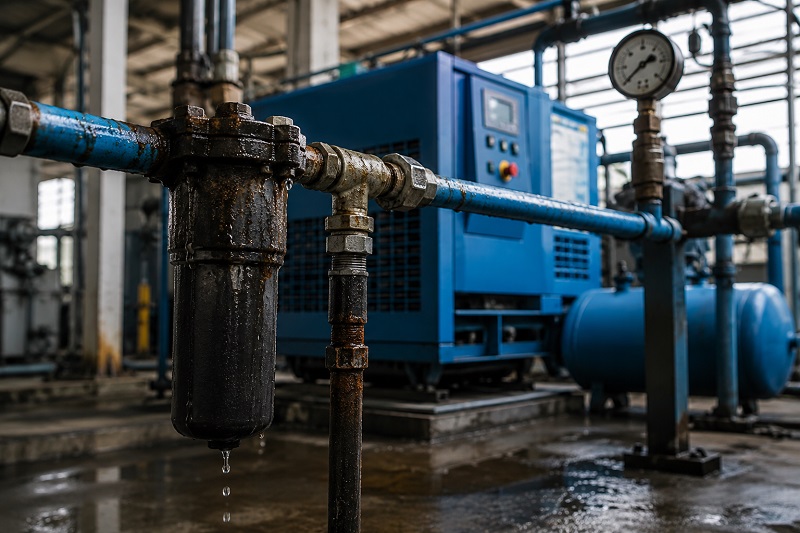
Compressed air is one of the most widely used utilities in industrial operations. From manufacturing plants and food processing facilities to automotive workshops and packaging lines, industrial compressors power a wide range of pneumatic equipment and automated systems every day. However, one of the most overlooked threats to compressed air system performance is moisture.
Compressed air moisture may seem harmless at first, but over time it can lead to serious operational issues, costly downtime, equipment failure, and reduced productivity. Excess moisture inside compressed air systems contributes to corrosion, condensate buildup, contamination, and premature wear of critical components.
Without the correct air treatment strategy, businesses may unknowingly reduce the lifespan of their equipment while increasing maintenance and energy costs. Understanding how moisture develops in compressed air systems and how to control it is essential for maintaining efficiency, reliability, and long-term equipment protection.
What Causes Moisture in Compressed Air Systems?
Moisture is naturally present in atmospheric air. When industrial compressors draw in ambient air, they also pull in water vapour, dust particles, and airborne contaminants. During the compression process, the concentration of moisture increases significantly due to rising pressure and temperature.
As compressed air cools while moving through the system, the moisture condenses into liquid water. This process creates condensate buildup within pipelines, air receivers, pneumatic tools, valves, and production equipment.
Several factors can worsen compressed air moisture problems, including:
- High humidity environments
- Poor ventilation around compressor rooms
- Insufficient air dryer capacity
- Lack of moisture separators
- Inadequate compressed air maintenance
- Blocked or neglected air filtration systems
In many industrial environments, moisture issues develop gradually, making them difficult to detect until performance problems begin affecting operations.
How Moisture Damages Industrial Equipment
Excess moisture inside compressed air systems can affect almost every part of an industrial operation. While the immediate impact may seem minor, long-term exposure often results in expensive repairs and production losses.
Corrosion and Rust Formation
One of the biggest risks associated with compressed air moisture is internal corrosion. Water inside pipelines, air receivers, and pneumatic equipment gradually causes rust and metal deterioration.
Over time, corrosion weakens system components, increases the likelihood of leaks, and contaminates the compressed air supply with rust particles. This not only damages machinery but also reduces overall system efficiency.
In industries such as food processing, pharmaceuticals, and electronics manufacturing, corrosion-related contamination can compromise product quality and lead to compliance issues.
Damage to Pneumatic Equipment
Pneumatic equipment relies on clean, dry compressed air to operate correctly. Moisture entering pneumatic cylinders, valves, actuators, and tools can interfere with lubrication, create internal wear, and reduce operational accuracy.
For example, water contamination inside pneumatic control systems may cause sticking valves, inconsistent pressure, and sluggish equipment performance. In automated manufacturing environments, even small interruptions can disrupt entire production lines.
Increased Wear on Industrial Compressors
Industrial compressors themselves can also suffer from excessive moisture exposure. Condensate buildup within compressor components may contribute to overheating, oil contamination, and reduced efficiency.
When moisture is not properly removed, compressors often need to work harder to maintain pressure levels. This increases energy consumption and accelerates component wear.
Freezing Problems in Cold Environments
In colder operating conditions, moisture inside compressed air lines can freeze. Frozen condensate may block airflow, damage valves, or even cause pipe ruptures.
This issue is particularly problematic in outdoor industrial environments, mining operations, and refrigerated facilities where temperature fluctuations are common.
Effects of Compressed Air Contamination
Moisture is one of the leading causes of compressed air contamination. When water combines with oil vapours, dust, and debris inside the system, it creates a mixture that can negatively affect both equipment and finished products.
Contaminated compressed air may lead to:
- Reduced product quality
- Premature equipment failure
- Blocked valves and filters
- Inconsistent pneumatic performance
- Higher maintenance costs
- Production downtime
In industries where clean compressed air is essential, such as medical manufacturing, food production, and electronics assembly, contamination can result in serious operational and regulatory consequences.
Even in general manufacturing environments, contaminated air reduces productivity and increases the overall cost of ownership of industrial equipment.
The Importance of Industrial Air Dryers and Filtration
Controlling compressed air moisture requires more than simply draining condensate from tanks. Effective air treatment systems are essential for maintaining clean and reliable compressed air throughout the facility.
Industrial Air Dryers
Industrial air dryers play a critical role in removing moisture from compressed air systems before it reaches downstream equipment.
There are several types of industrial air dryers available, including:
- Refrigerated air dryers
- Desiccant air dryers
- Membrane air dryers
Each type is designed for specific applications and operating conditions. Refrigerated dryers are commonly used in general industrial applications, while desiccant dryers are ideal for environments requiring extremely low dew points.
Properly sized industrial air dryers help prevent condensate buildup, improve system reliability, and extend equipment lifespan.
Air Filtration Systems
Air filtration systems work alongside dryers to remove contaminants such as oil aerosols, dirt particles, and moisture residue from compressed air.
High-quality filtration is essential for protecting sensitive pneumatic equipment and maintaining clean production processes.
A complete compressed air treatment setup may include:
- Pre-filters
- Coalescing filters
- Particulate filters
- Activated carbon filters
- Moisture separators
These components help maintain air quality standards while reducing wear on downstream equipment.
Moisture Separators
Moisture separators are another important part of compressed air systems. These devices remove bulk water from the air stream before it reaches filters or dryers.
Installing moisture separators at strategic points within the system improves overall air treatment efficiency and reduces strain on filtration components.
Preventive Maintenance Tips for Compressed Air Systems
Preventive maintenance is essential for controlling compressed air moisture and protecting industrial equipment from long-term damage.
Inspect for Air Leaks Regularly
Leaks increase compressor workload and can introduce additional contaminants into the system. Routine inspections help identify damaged fittings, loose connections, and deteriorating hoses before they become major problems.
Drain Condensate Properly
Condensate should be removed regularly from air receivers, filters, and low points within the piping system. Automatic drains can help improve consistency and reduce manual maintenance requirements.
Monitor Dryer Performance
Industrial air dryers should be inspected and serviced according to manufacturer recommendations. A malfunctioning dryer can quickly lead to excessive moisture levels throughout the system.
Replace Filters on Schedule
Blocked or saturated filters reduce airflow and allow contaminants to pass through the system. Maintaining clean air filtration systems improves both air quality and operational efficiency.
Schedule Professional System Audits
Regular compressed air maintenance inspections and performance audits help identify hidden moisture issues before they result in equipment failure or costly downtime.
Professional assessments often reveal inefficiencies that can reduce energy consumption and improve overall system reliability.
Conclusion
Moisture in compressed air systems is far more than a minor inconvenience. Left untreated, it can lead to corrosion, compressed air contamination, equipment failure, production downtime, and rising operational costs.
By investing in proper industrial air dryers, air filtration systems, moisture separators, and preventive maintenance practices, businesses can significantly improve compressed air system performance while extending the lifespan of valuable industrial equipment.
Whether operating a manufacturing facility, processing plant, or industrial workshop, maintaining clean and dry compressed air should always be a priority for long-term operational efficiency and reliability.
Protect Your Equipment with Professional Compressed Air Solutions
If your facility is experiencing issues related to compressed air moisture, condensate buildup, or system contamination, Capstone Engineering can help. Our team provides expert assistance with industrial compressors, air dryers, filtration systems, moisture control, and compressed air maintenance solutions tailored to your operational requirements.
Contact Capstone Engineering through our contact page to discuss how we can help improve efficiency, reduce downtime, and protect your industrial equipment.
FAQs and Answers
1. What causes moisture in compressed air systems?
Moisture forms when atmospheric air containing water vapour is compressed and then cooled inside the compressed air system. This creates condensate buildup within pipes, tanks, and pneumatic equipment.
2. Why is compressed air moisture harmful to industrial equipment?
Compressed air moisture can cause corrosion, rust, contamination, and internal wear in industrial equipment, reducing efficiency and shortening equipment lifespan.
3. How do industrial air dryers remove moisture?
Industrial air dryers remove moisture by cooling, absorbing, or separating water vapour from compressed air before it reaches downstream equipment and production systems.
4. What are the signs of compressed air contamination?
Common signs include rust in pipelines, water in air lines, inconsistent pneumatic equipment performance, blocked filters, increased maintenance issues, and poor product quality.
5. What industries are most affected by compressed air moisture?
Industries such as manufacturing, food processing, pharmaceuticals, automotive, mining, and electronics rely heavily on clean, dry compressed air and are highly affected by moisture contamination.
6. How often should compressed air systems be maintained?
Compressed air systems should be inspected regularly, with preventive maintenance performed according to operating conditions and manufacturer recommendations to maintain efficiency and reliability.
7. What role do moisture separators play in compressed air systems?
Moisture separators remove bulk water from compressed air systems before the air reaches filters, dryers, or pneumatic equipment, helping improve overall air quality and system efficiency.
8. Can compressed air moisture increase operating costs?
Yes. Excess moisture forces industrial compressors to work harder, increases energy consumption, causes equipment damage, and leads to costly downtime and maintenance expenses.