
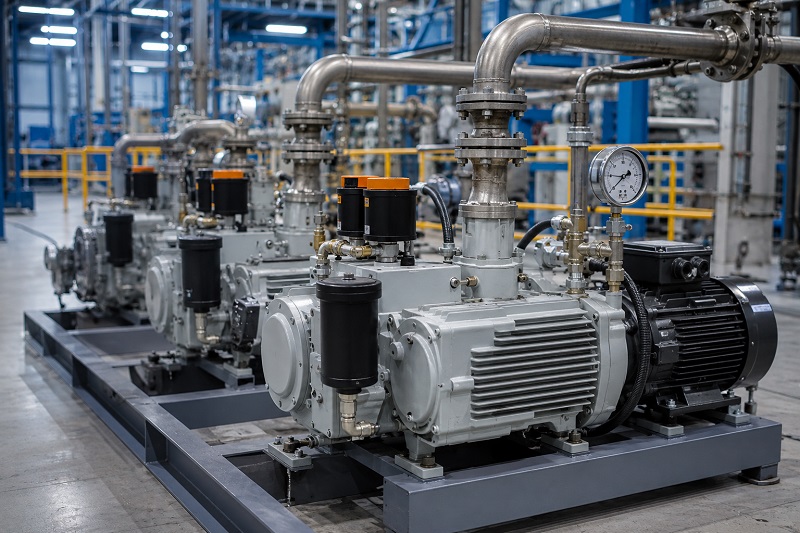
Vacuum systems play a critical role in modern industrial manufacturing. From packaging lines and pharmaceutical production to plastics processing and automated handling systems, industrial vacuum pumps are essential for maintaining productivity, product quality, and operational efficiency.
However, selecting the right vacuum pump is not always straightforward. Different industries require different vacuum levels, operating conditions, and maintenance approaches. Choosing the wrong system can lead to excessive energy consumption, unnecessary downtime, reduced vacuum system efficiency, and higher operational costs.
Whether your operation relies on continuous production, industrial automation, or specialised industrial processing equipment, understanding the differences between dry vacuum pumps and oil lubricated vacuum pumps is essential for making the right investment.
This guide explores how industrial vacuum pumps work, the various technologies available, and the key factors businesses should consider when selecting the most suitable vacuum solution for their applications.
What Are Industrial Vacuum Pumps?
Industrial vacuum pumps are mechanical devices designed to remove air, gas, or vapours from a sealed environment to create vacuum pressure. By reducing pressure within a system, these pumps support a wide range of industrial processes that require controlled vacuum conditions.
Vacuum technology is used across numerous industries because it enables manufacturers to improve production accuracy, maintain clean processing environments, move materials efficiently, and support automated production systems.
Industrial vacuum pumps are commonly integrated into:
- Packaging and sealing systems
- Pneumatic systems
- Material conveying equipment
- Food processing facilities
- Medical and pharmaceutical production
- Plastic extrusion systems
- Industrial automation lines
- Chemical processing plants
Depending on the application, vacuum systems may operate continuously or intermittently, requiring different pump technologies to meet operational demands.
How Vacuum Pumps Work in Industrial Applications
Vacuum pumps operate by removing air molecules from a closed chamber or system, creating a pressure difference between the vacuum environment and atmospheric pressure.
As vacuum pressure increases, the system can perform specialised tasks such as material transfer, packaging, drying, degassing, lifting, filtration, or contamination control.
In industrial manufacturing environments, vacuum pumps often work alongside industrial processing equipment to maintain process stability and production consistency.
For example:
- Food packaging facilities use vacuum pumps to remove oxygen from packaging, extending product shelf life.
- Plastic manufacturing plants rely on vacuum systems during extrusion and moulding processes.
- Pharmaceutical manufacturers use vacuum technology for sterile production environments and drying applications.
- Automated production lines use vacuum systems for pick-and-place handling systems.
The performance of a vacuum system depends heavily on selecting the correct pump design, capacity, and operating configuration.
Types of Industrial Vacuum Pumps
There are several types of industrial vacuum pumps available, each designed for specific operating conditions and vacuum requirements.
Dry Vacuum Pumps
Dry vacuum pumps operate without oil inside the compression chamber. These systems are designed to keep the pumped medium free from contamination, making them ideal for clean industrial processes.
Common dry vacuum pump technologies include:
- Dry claw vacuum pumps
- Dry vane vacuum pumps
- Diaphragm vacuum pumps
- Screw vacuum pumps
Because there is no oil contact within the compression chamber, dry vacuum pumps are commonly used in industries where cleanliness and product purity are critical.
Oil Lubricated Vacuum Pumps
Oil lubricated vacuum pumps use oil for sealing, lubrication, and cooling during operation. These systems are known for their durability, stable performance, and ability to achieve deeper vacuum levels.
Common oil lubricated vacuum pump designs include:
- Single-stage rotary vane pumps
- Dual-stage rotary vane pumps
- High vacuum oil lubricated pumps
Oil lubricated vacuum pumps are widely used in demanding industrial applications that require reliable continuous operation and high vacuum performance.
Roots Vacuum Pumps
Roots vacuum pumps are often used in combination with backing pumps to increase pumping speed and improve vacuum pressure levels in high-capacity industrial systems.
These pumps are commonly found in large-scale industrial manufacturing environments where high throughput and rapid evacuation are required.
Dry Vacuum Pumps vs Oil Lubricated Vacuum Pumps
One of the most important decisions when selecting industrial vacuum pumps is choosing between dry vacuum pumps and oil lubricated vacuum pumps.
| Feature | Dry Vacuum Pumps | Oil Lubricated Vacuum Pumps |
|---|---|---|
| Contamination Risk | Very low | Moderate |
| Maintenance Requirements | Lower | Higher due to oil changes |
| Vacuum Levels | Moderate to high | High to very high |
| Energy Efficiency | Excellent for clean applications | Strong performance in heavy-duty systems |
| Continuous Operation | Excellent | Excellent |
| Application Suitability | Food, pharmaceutical, electronics | Industrial processing, manufacturing |
Dry vacuum pumps are often preferred in environments where contamination control is essential, while oil lubricated vacuum pumps remain highly effective for demanding industrial applications that require robust vacuum performance.
Key Factors to Consider When Selecting a Vacuum Pump
Selecting the correct industrial vacuum pump requires more than simply choosing the largest or most powerful unit available.
Vacuum Pressure Requirements
Different industrial applications require different vacuum pressure levels. Understanding the required operating vacuum is critical when selecting the correct pump technology.
For example, packaging systems may require moderate vacuum levels, while laboratory or semiconductor applications may require extremely high vacuum performance.
Flow Rate and Capacity
The required pumping speed and airflow capacity will influence system performance and production efficiency. Undersized systems may struggle to maintain vacuum levels during peak demand, while oversized systems may increase energy costs unnecessarily.
Continuous Operation Requirements
Many industrial manufacturing environments operate around the clock. In these applications, the vacuum system must be designed for reliable continuous operation with minimal downtime.
Heavy-duty industrial processing equipment often requires vacuum systems capable of handling long operational cycles without overheating or excessive wear.
Environmental Conditions
Operating conditions such as humidity, dust, chemical exposure, and temperature can affect vacuum pump performance and lifespan.
Facilities operating in harsh industrial environments should select systems designed for durability and resistance to contamination.
Maintenance Requirements
Maintenance considerations are often overlooked during system selection. Some vacuum technologies require frequent servicing, oil replacement, or filter maintenance, while others offer lower long-term maintenance requirements.
Evaluating lifecycle costs is just as important as evaluating the initial purchase price.
Industry-Specific Vacuum Pump Applications
Food and Beverage Industry
Vacuum systems are widely used in food packaging, product handling, and vacuum sealing processes. Dry vacuum pumps are often preferred due to their clean operation and low contamination risk.
Pharmaceutical Manufacturing
Pharmaceutical production facilities rely heavily on vacuum technology for sterile processing, drying, filtration, and contamination control.
Reliable vacuum system efficiency is essential for maintaining compliance and product integrity.
Plastics and Packaging
Plastic extrusion systems, thermoforming equipment, and packaging machinery frequently depend on industrial vacuum pumps to maintain stable production processes.
Chemical Processing
Chemical plants often use oil lubricated vacuum pumps for solvent recovery, distillation systems, degassing processes, and vapour handling applications.
Industrial Automation
Modern industrial automation systems use vacuum pumps for robotic handling systems, pick-and-place operations, and automated production equipment.
Vacuum pressure consistency is critical for maintaining precision and production reliability.
Energy Efficiency and Maintenance Considerations
Energy efficiency has become a major priority for industrial businesses seeking to reduce operational costs and improve sustainability.
Vacuum systems can account for a significant portion of a facility’s energy consumption, especially in operations requiring continuous vacuum generation.
To improve energy efficiency:
- Select correctly sized vacuum systems
- Use variable speed drive technology where applicable
- Perform regular filter and oil maintenance
- Monitor vacuum pressure performance
- Inspect systems for leaks and inefficiencies
Preventive maintenance also plays an important role in extending equipment lifespan and reducing unexpected downtime.
Routine servicing helps ensure:
- Stable vacuum pressure
- Reduced wear on internal components
- Lower operating temperatures
- Improved vacuum system efficiency
- Longer equipment lifespan
Benefits of Choosing the Correct Vacuum System
Investing in the correct industrial vacuum pump delivers benefits that extend well beyond basic system operation.
Properly selected vacuum systems help businesses achieve:
- Improved production reliability
- Reduced energy consumption
- Lower maintenance costs
- Better product quality
- Enhanced industrial automation performance
- Reduced downtime
- Longer equipment lifespan
- Improved process efficiency
In competitive industrial sectors, even small improvements in operational efficiency can significantly affect profitability and production performance.
Conclusion
Choosing the right industrial vacuum pumps requires careful consideration of application requirements, operating conditions, maintenance expectations, and long-term efficiency goals.
Whether selecting dry vacuum pumps for contamination-sensitive environments or oil lubricated vacuum pumps for demanding industrial processes, the correct vacuum solution can improve productivity, reduce operational costs, and support reliable continuous operation.
As industrial manufacturing and automation technologies continue to evolve, businesses that invest in efficient and properly designed vacuum systems will be better positioned to maintain productivity, reliability, and operational performance.
Need Expert Advice on Industrial Vacuum Pumps?
Choosing the right vacuum system can make a significant difference to operational efficiency, equipment reliability, and long-term production costs. Capstone Engineering provides expert guidance on industrial vacuum pumps, vacuum systems, dry vacuum pumps, oil lubricated vacuum pumps, and industrial air solutions tailored to your specific applications and operational requirements.
Contact Capstone Engineering through our contact page to discuss the best vacuum solution for your business and industrial processing needs.
FAQs and Answers
1. What are industrial vacuum pumps used for?
Industrial vacuum pumps are used to remove air, gas, or vapours from systems to create vacuum pressure for manufacturing, packaging, processing, automation, and material handling applications.
2. What is the difference between dry vacuum pumps and oil lubricated vacuum pumps?
Dry vacuum pumps operate without oil in the compression chamber, making them ideal for clean applications, while oil lubricated vacuum pumps use oil for sealing and cooling to achieve deeper vacuum levels and heavy-duty performance.
3. Which industries commonly use industrial vacuum pumps?
Industries such as food processing, pharmaceuticals, plastics, chemical manufacturing, electronics, automotive, and industrial automation rely heavily on industrial vacuum pumps.
4. How do vacuum pumps improve industrial manufacturing processes?
Vacuum pumps improve manufacturing processes by increasing production efficiency, supporting pneumatic systems, reducing contamination, and maintaining stable vacuum pressure during operation.
5. What factors should be considered when selecting a vacuum pump?
Key factors include vacuum pressure requirements, pumping capacity, energy efficiency, maintenance requirements, operating environment, and whether continuous operation is needed.
6. Are dry vacuum pumps more energy efficient?
Dry vacuum pumps are often more energy efficient in clean applications because they typically require less maintenance and eliminate oil-related losses and contamination risks.
7. Why is regular vacuum pump maintenance important?
Regular maintenance helps maintain vacuum system efficiency, reduce downtime, prevent equipment failure, and extend the lifespan of industrial processing equipment.
8. Can industrial vacuum pumps support continuous operation?
Yes. Many industrial vacuum pumps are specifically designed for continuous operation in demanding industrial environments and automated production systems.