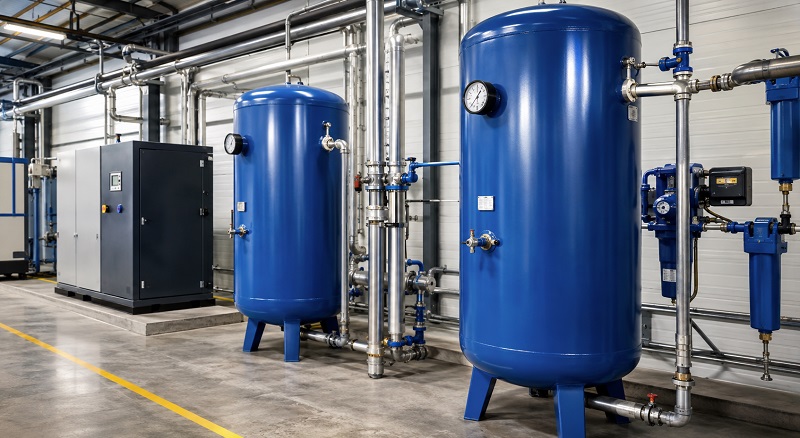
Air Receiver Tanks for Efficient Compressed Air Systems
Air receiver tanks are one of the most important yet frequently overlooked components in a compressed air system. While compressors generate compressed air, air receiver tanks store it, stabilise pressure, reduce compressor workload, and ensure a consistent air supply throughout an industrial facility. Without adequate compressed air storage, even a high-quality compressor can struggle to meet changing production demands efficiently.
Many manufacturing plants and industrial facilities only recognise the importance of air receiver tanks after experiencing pressure fluctuations, excessive compressor cycling, increased energy costs, or unexpected equipment failures. These issues can reduce productivity, increase maintenance costs, and shorten the lifespan of valuable equipment.
Whether you are designing a new compressed air installation or upgrading an existing system, selecting the correct air receiver tank plays a vital role in improving compressed air system performance, energy efficiency, and long-term reliability.
Key Takeaways
- Air receiver tanks provide stable compressed air storage for changing production demands.
- Properly sized tanks reduce compressor cycling and improve energy efficiency.
- Air receivers help maintain consistent operating pressure across compressed air systems.
- They improve moisture separation and condensate management.
- The correct air receiver extends compressor life while reducing maintenance costs.
What Are Air Receiver Tanks?
Air receiver tanks are pressure vessels designed to store compressed air before it is distributed throughout a compressed air system. They act as a reserve of compressed air that can be used whenever demand temporarily exceeds compressor output.
Rather than forcing compressors to react instantly to every change in air demand, air receiver tanks provide a buffer that keeps system pressure stable and reduces unnecessary compressor starts and stops.
Air receiver tanks also play an important role in cooling compressed air, separating moisture, and improving the efficiency of downstream air treatment equipment.
Wet Air Receiver Tanks
Wet receivers are installed immediately after the compressor and before the air dryer. Because the compressed air is still hot and moisture-laden, these tanks allow air to cool naturally, enabling water vapour to condense before entering the drying equipment.
This reduces the moisture load on downstream filters and dryers while improving overall condensate management.
Dry Air Receiver Tanks
Dry receivers are installed after the air dryer. Their primary purpose is to store clean, dry compressed air and maintain stable operating pressure throughout the compressed air distribution network.
Dry receivers improve pressure stability during production peaks and ensure a reliable supply of high-quality compressed air to pneumatic equipment.
Why Air Receiver Tanks Are Important
Compressed air demand rarely remains constant throughout a production shift. Machines start and stop, pneumatic tools cycle on and off, and production schedules create sudden spikes in air consumption.
Air receiver tanks absorb these variations by storing compressed air during periods of low demand and supplying it when demand temporarily increases.
The result is a more efficient and reliable compressed air system with numerous operational benefits.
- Improved pressure stability throughout the plant
- Reduced compressor cycling
- Consistent air supply during peak demand
- Lower energy consumption
- Improved equipment protection
- Longer compressor service life
- Better compressed air distribution
- Improved industrial productivity
How Air Receiver Tanks Improve System Performance
Reducing Compressor Cycling
One of the biggest advantages of compressed air storage is reducing compressor cycling.
Without sufficient storage, compressors frequently start and stop whenever demand changes. This repeated cycling increases motor wear, generates unnecessary heat, and consumes additional electricity.
An adequately sized air receiver tank stores enough compressed air to satisfy short periods of increased demand without immediately requiring the compressor to restart. Fewer start-stop cycles reduce mechanical stress and improve overall system efficiency.
Improving Pressure Stability
Pressure fluctuations can negatively affect manufacturing processes, pneumatic tools, and automated production equipment.
Air receiver tanks stabilise operating pressure by supplying stored compressed air whenever demand suddenly increases. This prevents rapid pressure drops and helps maintain consistent performance across the entire air reticulation system.
Stable pressure also allows compressors to operate more efficiently because they are not constantly responding to minor changes in demand.
Supporting Peak Air Demand
Many industrial facilities experience short periods where compressed air demand exceeds normal compressor capacity.
Examples include:
- Multiple pneumatic tools operating simultaneously
- Packaging lines starting together
- Large pneumatic cylinders cycling rapidly
- Automatic cleaning systems using compressed air bursts
During these temporary events, stored compressed air is released from the air receiver tank, preventing pressure drops and maintaining uninterrupted production.
Improving Moisture Separation
Compressed air leaving the compressor contains significant heat and moisture.
As compressed air enters a wet receiver tank, it cools naturally. Cooling causes water vapour to condense into liquid condensate, which settles at the bottom of the vessel.
This natural moisture separation provides several advantages:
- Reduced moisture entering dryers
- Improved air treatment efficiency
- Better condensate management
- Reduced corrosion throughout the compressed air system
- Cleaner compressed air for downstream equipment
Extending Compressor Life
Compressors last longer when they operate under stable conditions.
Air receiver tanks reduce unnecessary compressor starts, minimise operating stress, and improve cooling cycles.
The result is:
- Reduced mechanical wear
- Longer equipment life
- Lower maintenance costs
- Improved compressor reliability
- Reduced downtime
Wet Receiver vs Dry Receiver Tanks
Both wet and dry receiver tanks perform important functions, but they are installed at different points within the compressed air system.
| Feature |
Wet Receiver |
Dry Receiver |
| Installation Location |
Before the air dryer |
After the air dryer |
| Main Purpose |
Cooling and moisture separation |
Storage of clean dry air |
| Supports |
Condensate removal |
Pressure stability |
| Air Quality |
Untreated compressed air |
Dried compressed air |
| Primary Benefit |
Reduces dryer load |
Improves system performance during peak demand |
Many industrial compressed air systems benefit from using both wet and dry air receiver tanks as part of a complete compressed air storage strategy.
How to Size an Air Receiver Tank
Selecting the correct air receiver tank requires more than simply matching the compressor size. Several operating factors should be considered to ensure optimal system performance.
- Compressor capacity
- Compressed air demand
- Operating pressure
- Peak air consumption
- Future production expansion
- Compressed air distribution layout
An undersized air receiver provides insufficient storage, leading to pressure fluctuations and excessive compressor cycling.
An oversized receiver may increase capital costs, occupy unnecessary floor space, and slow pressure recovery after extended demand periods.
Proper system design ensures the storage capacity matches both current operational requirements and future production growth.
Common Problems Caused by Incorrect Air Receiver Selection
An incorrectly sized or poorly positioned air receiver tank can reduce the efficiency of an otherwise well-designed compressed air system.
Common problems include:
- Frequent pressure fluctuations affecting pneumatic equipment
- Excessive compressor short cycling
- Higher energy consumption
- Poor condensate management
- Reduced industrial productivity
- Premature compressor wear
- Increased maintenance costs
For example, a manufacturing facility operating several CNC machines may experience repeated pressure drops whenever multiple machines begin production simultaneously. Installing a correctly sized air receiver tank provides sufficient compressed air storage to maintain stable pressure and eliminate production interruptions.
Maintenance Tips for Air Receiver Tanks
Routine maintenance helps air receiver tanks operate safely and efficiently throughout their service life.
- Drain condensate regularly to prevent corrosion.
- Inspect safety relief valves to ensure correct operation.
- Check pressure gauges for accuracy.
- Inspect the vessel for corrosion or physical damage.
- Carry out internal cleaning where required.
- Schedule periodic inspections in accordance with applicable pressure vessel regulations.
Preventative maintenance protects both the pressure vessel and the entire compressed air system while helping maintain safe operation.
Benefits of Installing the Right Air Receiver Tank
Choosing the correct air receiver tank delivers measurable operational and financial benefits.
- Improved compressed air system performance
- Greater pressure stability
- Reduced compressor cycling
- Improved energy efficiency
- Better moisture separation
- Enhanced condensate management
- Longer compressor life
- Lower maintenance costs
- Improved industrial productivity
- More reliable compressed air distribution
Conclusion
Air receiver tanks are far more than simple compressed air storage vessels. They are essential components that improve pressure stability, reduce compressor cycling, enhance moisture separation, and support consistent compressed air delivery throughout industrial facilities.
By selecting the correct air receiver tank and integrating it into a properly designed compressed air system, businesses can improve energy efficiency, extend equipment life, reduce operating costs, and achieve more reliable production.
Whether you are installing a new compressed air system or upgrading an existing one, investing in the right compressed air storage solution is an investment in long-term system performance and operational reliability.
Need Expert Advice on Air Receiver Tanks?
Choosing the right air receiver tank requires careful consideration of compressor capacity, compressed air demand, operating pressure, and future production requirements. The experienced team at Capstone Engineering can help you select the ideal pressure vessel, optimise compressed air storage, and improve the performance of your entire compressed air system.
Contact Capstone Engineering through our
contact page to discuss air receiver tanks, pressure vessels, compressed air storage solutions, and complete compressed air system optimisation for your facility.
Frequently Asked Questions
1. What is the purpose of an air receiver tank in a compressed air system?
An air receiver tank stores compressed air so it is available when demand increases. It helps maintain stable system pressure, reduces compressor cycling, improves energy efficiency, and ensures a consistent air supply for pneumatic equipment.
2. How do air receiver tanks improve compressed air system performance?
Air receiver tanks improve compressed air system performance by stabilising operating pressure, supplying stored air during peak demand, reducing pressure fluctuations, and allowing compressors to operate more efficiently with fewer start and stop cycles.
3. What is the difference between a wet receiver and a dry receiver tank?
A wet receiver tank is installed before the air dryer and helps cool compressed air, allowing moisture to condense for easier removal. A dry receiver tank is installed after the dryer and stores clean, dry compressed air while maintaining stable pressure throughout the compressed air distribution system.
4. How does an air receiver tank reduce compressor cycling?
An air receiver tank stores compressed air during periods of low demand and releases it when demand increases. This reduces the number of times the compressor needs to start and stop, lowering mechanical wear, improving energy efficiency, and extending compressor life.
5. How do air receiver tanks help remove moisture from compressed air?
As hot compressed air enters a wet receiver tank, it cools naturally, causing water vapour to condense into liquid. This condensate can then be drained from the tank, reducing the moisture load on downstream air dryers and filters while improving overall air quality.
6. How do you choose the correct size air receiver tank?
Selecting the right air receiver tank depends on several factors, including compressor capacity, operating pressure, peak compressed air demand, production cycles, compressed air distribution, and future expansion plans. A properly sized tank ensures reliable system performance and improved energy efficiency.
7. What problems can occur if an air receiver tank is too small?
An undersized air receiver tank can lead to pressure fluctuations, frequent compressor cycling, increased energy consumption, excessive equipment wear, poor moisture separation, and reduced productivity. Correct sizing helps avoid these operational issues.
8. How often should an air receiver tank be inspected and maintained?
Air receiver tanks should be inspected regularly to ensure safe and reliable operation. Routine maintenance includes draining condensate, checking safety relief valves, inspecting pressure gauges, examining the vessel for corrosion, and carrying out inspections in accordance with applicable pressure vessel regulations and manufacturer recommendations.