
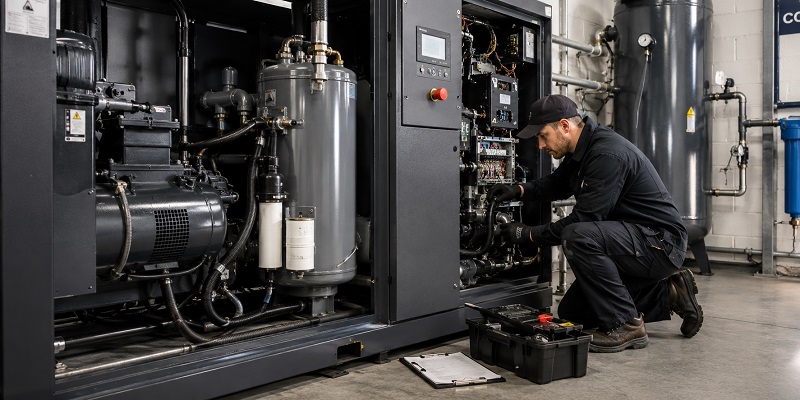
Preventive Maintenance for Compressed Air Systems
Unexpected compressor failures are among the most expensive issues an industrial facility can face. A single breakdown can stop production lines, delay customer deliveries, increase labour costs, and result in costly emergency repairs. For businesses that rely on compressed air systems to power machinery and production equipment, even a short period of downtime can have a significant impact on operational efficiency and profitability.
Many compressor failures are not caused by major mechanical faults. Instead, they develop gradually through neglected servicing, dirty filters, air leaks, poor lubrication, or moisture contamination. Fortunately, these problems are largely preventable with a structured preventive maintenance programme.
Compressed air preventive maintenance helps businesses maintain reliable system performance, reduce unexpected downtime, extend equipment lifespan, and improve energy efficiency. By identifying and resolving small issues before they become major failures, facilities can protect productivity while lowering long-term operating costs.
Key Takeaways
- Preventive maintenance significantly reduces compressed air system downtime.
- Regular servicing improves compressor reliability and equipment lifespan.
- Routine inspections identify problems before they interrupt production.
- Clean filters, dry air, and proper lubrication improve energy efficiency.
- Predictive monitoring helps maintenance teams prevent unexpected failures.
Why Preventive Maintenance Matters
Compressed air systems operate continuously in demanding industrial environments. Over time, normal wear, contamination, and changing operating conditions affect compressor performance. Without regular maintenance, small issues can quickly develop into expensive failures.
A preventive maintenance programme focuses on scheduled inspections, servicing, and component replacement before failures occur. Rather than reacting to breakdowns, maintenance teams keep equipment operating at peak performance throughout its service life.
Preventive maintenance delivers several important advantages:
- Improved compressor reliability
- Better equipment protection
- Continuous production operations
- Reduced emergency repair costs
- Improved energy efficiency
- Longer equipment lifespan
- Lower overall operating costs
Common Causes of Compressed Air System Downtime
Most compressor failures can be traced to a small number of maintenance-related issues. Understanding these common causes helps maintenance teams prevent unnecessary downtime.
Air Leaks
Even small air leaks waste significant amounts of compressed air and force compressors to work harder than necessary. Over time, increased operating hours raise energy consumption, increase equipment wear, and reduce overall system efficiency.
In many manufacturing facilities, undetected leaks account for a considerable percentage of compressed air losses, making regular leak detection an essential maintenance activity.
Dirty Filters
Compressed air filters remove dust, oil, and contaminants before air reaches downstream equipment. As filters become blocked, airflow restriction increases pressure drop throughout the system.
Higher pressure drop forces compressors to consume more electricity while reducing airflow to production equipment.
Moisture Problems
Moisture is one of the most common causes of compressed air system failures.
Without effective air dryers and condensate management, water enters air reticulation systems where it causes corrosion, damages pneumatic equipment, contaminates products, and shortens component life.
Poor Lubrication
Rotary screw compressors rely on proper lubrication to reduce friction, remove heat, and protect moving components.
Incorrect lubricant levels or degraded compressor oil increase wear, raise operating temperatures, and accelerate component failure.
Overheating
Blocked coolers, dirty ventilation systems, inadequate airflow, or excessive operating temperatures can cause compressors to overheat.
Overheating reduces efficiency and increases the risk of unexpected shutdowns.
Electrical Failures
Loose electrical connections, worn contactors, damaged sensors, and failing control systems can stop compressors without warning.
Routine inspections help identify electrical problems before they interrupt production.
Incorrect Operating Pressure
Operating compressors above the required pressure increases energy consumption and places unnecessary stress on the entire compressed air system.
Maintaining the correct operating pressure improves efficiency while reducing equipment wear.
Lack of Regular Servicing
Skipping scheduled servicing often results in multiple maintenance issues developing simultaneously.
Replacing inexpensive service components at the correct intervals is significantly more cost effective than repairing major compressor failures.
Preventive Maintenance Tasks Every Facility Should Perform
An effective maintenance programme includes routine inspections and scheduled servicing throughout the year.
| Maintenance Frequency | Recommended Tasks |
|---|---|
| Daily | Inspect oil levels, check pressure readings, listen for unusual noises, inspect for visible leaks. |
| Weekly | Drain condensate, inspect air filters, check dryer performance, inspect cooling systems. |
| Monthly | Inspect belts, electrical connections, safety valves, pressure gauges, and clean coolers. |
| Quarterly | Replace filters where required, inspect lubrication system, perform leak detection survey, test compressor controls. |
| Annually | Complete full compressor servicing, inspect pressure vessels, audit compressed air system performance, review maintenance records. |
Following a structured maintenance schedule helps facilities reduce failures while improving long-term reliability.
The Role of Air Filters and Dryers
Clean, dry compressed air is essential for reliable compressor operation.
Compressed air filters remove dust, oil aerosols, and contaminants that can damage equipment and reduce production quality.
Air dryers remove moisture before compressed air enters the distribution system, helping prevent corrosion and equipment failure.
Proper maintenance of filters and dryers provides several benefits:
- Reduced moisture contamination
- Improved air quality
- Lower risk of corrosion
- Better protection for pneumatic equipment
- Improved system reliability
Leak Detection and System Monitoring
Many compressed air systems lose a significant amount of generated air through leaks that remain unnoticed for months or even years.
Routine monitoring helps maintenance teams identify inefficiencies before they become expensive problems.
Effective monitoring includes:
- Routine leak surveys
- Ultrasonic leak detection
- Pressure monitoring
- Flow monitoring
- Energy consumption analysis
For example, a manufacturing plant that identifies and repairs multiple small leaks may reduce compressor operating hours while improving pressure stability throughout the production facility.
Predictive Maintenance Technologies
Modern compressed air systems increasingly use predictive maintenance technologies alongside traditional preventive maintenance.
Rather than relying only on scheduled servicing, predictive maintenance continuously monitors equipment condition to identify developing faults.
Common predictive maintenance technologies include:
- IoT monitoring platforms
- Smart sensors
- Vibration analysis
- Temperature monitoring
- Pressure monitoring
- Remote diagnostics
These technologies provide early warning of abnormal operating conditions, allowing maintenance teams to schedule repairs before failures occur.
Building an Effective Preventive Maintenance Plan
An organised maintenance plan ensures servicing is completed consistently across all compressed air equipment.
A comprehensive maintenance programme should include:
- Documented maintenance schedules
- Detailed service records
- Staff training
- Scheduled compressor servicing
- Spare parts inventory management
- Routine system performance reviews
Good maintenance planning improves accountability while helping facilities avoid missed service intervals.
Benefits of Preventive Maintenance
Investing in preventive maintenance delivers measurable operational and financial benefits throughout the life of a compressed air system.
- Reduced compressed air downtime
- Longer compressor life
- Lower maintenance costs
- Improved energy efficiency
- Higher equipment reliability
- Better industrial productivity
- Reduced emergency repairs
- Improved production continuity
- Greater return on investment
Conclusion
Preventive maintenance is one of the most effective investments a business can make to improve compressed air system reliability. Regular inspections, scheduled servicing, leak detection, filter replacement, lubrication management, and system monitoring all work together to prevent unexpected failures before they interrupt production.
Facilities that prioritise preventive maintenance benefit from lower operating costs, improved energy efficiency, longer equipment lifespan, and greater production reliability. When combined with predictive maintenance technologies and ongoing system optimisation, preventive maintenance helps businesses maximise the performance of both rotary screw compressors and piston compressors while reducing the risk of costly downtime.
A well-maintained compressed air system supports safer operations, higher productivity, and more consistent manufacturing performance for years to come.
Need Expert Assistance with Compressor Preventive Maintenance?
A successful preventive maintenance programme requires technical expertise, regular servicing, and ongoing system monitoring. Capstone Engineering provides professional industrial compressor maintenance, preventive maintenance programmes, compressed air system servicing, and complete system optimisation to help businesses maximise equipment reliability while minimising production downtime.
Contact Capstone Engineering through our contact page to discuss your compressed air maintenance requirements and discover how a tailored maintenance programme can improve reliability, reduce operating costs, and extend the life of your compressed air equipment.
Frequently Asked Questions
1. What is compressed air preventive maintenance?
Compressed air preventive maintenance is the planned inspection, servicing, and replacement of components before failures occur. It helps improve compressor reliability, reduce production downtime, extend equipment life, and maintain efficient system performance.
2. How does preventive maintenance reduce compressed air downtime?
Preventive maintenance identifies developing problems before they cause equipment failure. Regular inspections, filter replacement, lubrication checks, leak detection, and scheduled servicing reduce the risk of unexpected breakdowns and production interruptions.
3. How often should an industrial compressor be serviced?
Service frequency depends on the compressor type, operating hours, environment, and manufacturer recommendations. Daily checks, weekly inspections, monthly maintenance, quarterly servicing, and annual system audits are commonly included in a complete maintenance programme.
4. What are the most common causes of compressed air system failure?
Common causes include air leaks, dirty filters, moisture contamination, poor lubrication, overheating, electrical faults, incorrect operating pressure, and missed service intervals. These issues can increase energy consumption and lead to unexpected shutdowns.
5. Why are air filters and dryers important in preventive maintenance?
Air filters remove dust, oil, and contaminants, while air dryers reduce moisture in the compressed air supply. Maintaining these components protects pneumatic equipment, prevents corrosion, improves air quality, and reduces the risk of system failure.
6. How does leak detection improve compressor reliability?
Leak detection identifies areas where compressed air is escaping from pipes, fittings, valves, or equipment. Repairing leaks reduces compressor workload, improves pressure stability, lowers energy consumption, and helps prevent unnecessary wear.
7. What is the difference between preventive and predictive maintenance?
Preventive maintenance follows a planned servicing schedule, while predictive maintenance uses condition monitoring, sensors, vibration analysis, temperature readings, and remote diagnostics to identify developing faults. The two approaches work best when used together.
8. What are the main benefits of a compressed air maintenance programme?
A structured maintenance programme reduces compressed air downtime, improves energy efficiency, extends compressor life, lowers emergency repair costs, supports production continuity, and improves the return on investment from compressed air equipment.